My Mother Tests Her CO Alarm The First Of Every Month. A Firefighter Just Told Me What That Test Doesn’t Check.
“She’s never missed once. Calendar on the fridge. And the whole time, the one part that actually stands guard was never being tested at all.”

I Told Him About Her Like It Was Something To Be Proud Of
I told him about her like it was something to be proud of — because it is.
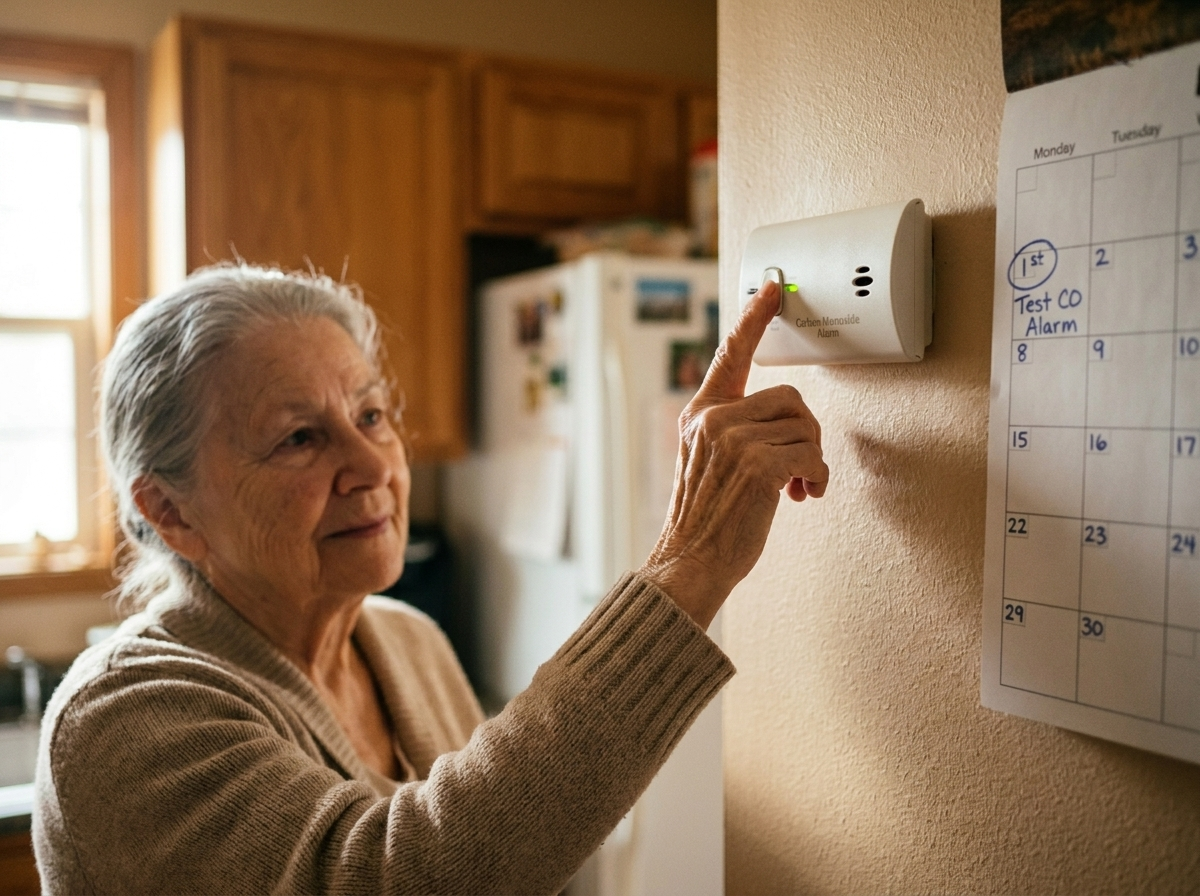
My mother is 76, lives alone in the house I grew up in, and she tests her carbon monoxide alarm the first of every single month. Calendar on the fridge. Never lets it slide. I wanted to brag a little, honestly.
I wasn’t ready for the look on his face. Or for the sentence that’s bothered me ever since.
The test proves it can still make noise. It doesn’t prove it can still smell the danger.
That firefighter is me. And the careful son in that conversation could be any one of us — because in this job, it’s the careful ones it catches.
The Most Diligent People I Know Were Trusting The Wrong Thing
You’d think the families who test their alarms every month would be the safe ones. For years I assumed that too.
Then I learned what pressing that button actually does. And I realized the most on-top-of-it people I know — the ones with the fridge calendar, the ones who never miss — were trusting a monthly habit that wasn’t checking the thing they thought it was.
He’d come to me because of a scare. His mom had been “under the weather” for a couple of weeks — headachey, worn out, dozing in her chair by mid-afternoon. He’d driven over on a hunch one evening and found her groggy, slow to the door. The kitchen stuffy and warm, the furnace running.
The carbon monoxide alarm in the hall: green light on, dead silent.
“But she tests it every month,” he kept saying. “It always beeps. It’s always green.”
The Button Checks The Horn. The Sensor Has No Button At All.
I got out the meter I carry — the kind with a live number on the screen — and I showed him.
“When she presses that button, it checks the horn and the circuit. It confirms the thing can still make a noise. That’s it. It does not check whether the sensor inside can still detect carbon monoxide — and the sensor is the only part actually standing guard.”
Then the part that made him go pale.
“At 30 parts per million she’s already getting those headaches, that fatigue — and the alarm stays silent, by design. At 50, still silent. And if that sensor has quietly worn out — they only last a few years — the unit will sit there glowing green and pass her monthly test every single time while detecting nothing.”
He stared at me. “Then what has she been testing every month? Why didn’t it warn her?”
There it is. The question, every time. Why didn’t it go off?
It Was Working. Just Not The Part That Protects Her.
“As far as that button’s concerned, it is working — the horn works. The part that’s supposed to smell the danger is a separate part, and there’s no button for it. The test passing and the air being safe turned out to be two different things.”
And I watched him start to blame himself. So I stopped him.
Your mother did everything right. She’s more on top of it than most people half her age — calendar on the fridge, tests it on the first, never lets it slide. That’s not the problem. That was never the problem.
The problem is she was handed a test that confirms the speaker and let her believe it confirmed the air. Nobody ever told her the difference. They don’t tell any of us.
Her carefulness was real. It just got pointed at the one thing the device can’t promise.
A Dead Sensor And A Perfect One Look Identical From The Outside
It bothered me enough that I went and confirmed it, because I didn’t want to be wrong in front of a worried man about his own mother.
It’s true. The test button is a speaker-and-circuit check by design — it was never meant to verify the sensor. And those sensors are chemical, with a real shelf life. A few years and they’re spent.
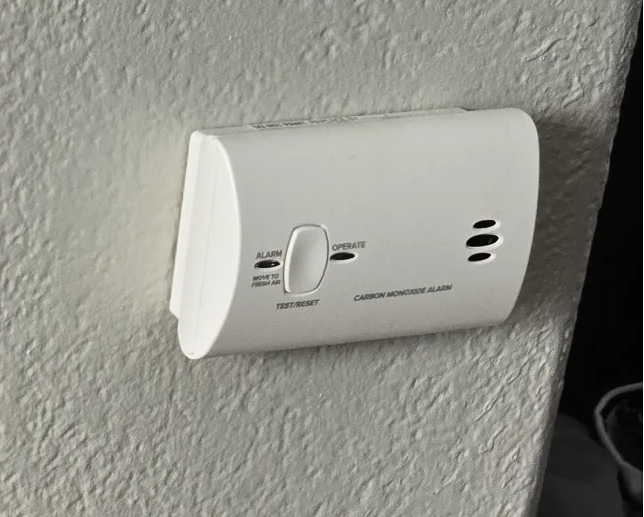
So you can have a unit that’s faithfully “passing” every month with a sensor that died two winters ago — and from the outside it looks identical to a perfect one. Same green light. Same beep. Same reassuring habit on the first of the month.
I’d never thought about it that way in fifteen years. That’s how good the blind spot is.
Nobody Who Measures For A Living Trusts The Beep
I asked a buddy who services furnaces all winter. He didn’t blink.
“I tell people the monthly test only proves it can still yell. It doesn’t prove it can still smell. I carry a meter because the button lies to you by accident.”
Then an ER nurse I hand patients off to said the same thing from her side: the careful families come in swearing their detector is fine, because it beeps when they test it. Beeping isn’t detecting.
Two trades, a third profession, one answer. The people who actually measure don’t trust the beep. They read a number.
What I Trust Reads The Air Every Second
So here’s the difference, and it’s the whole thing.
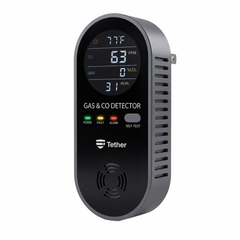
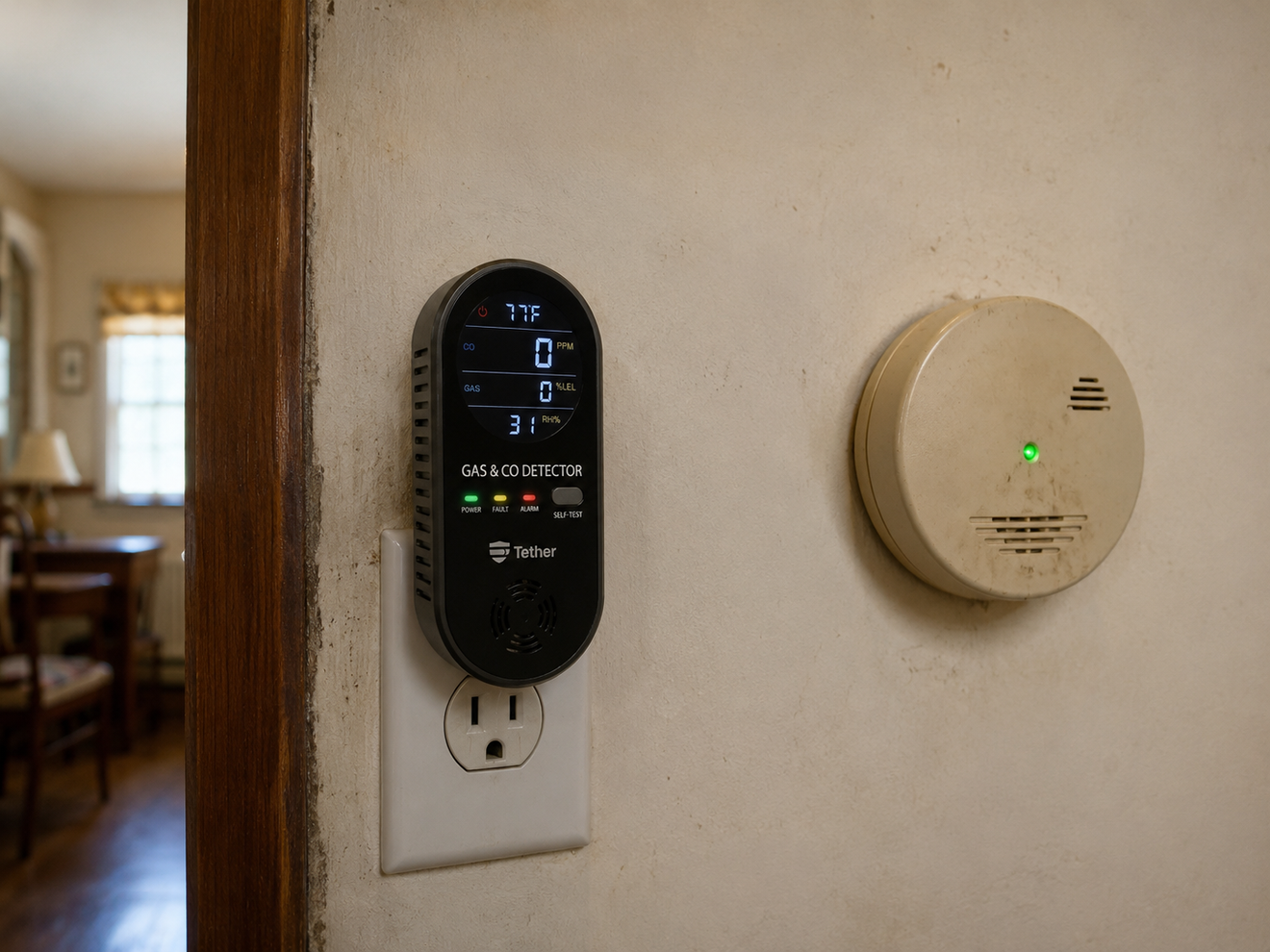
The old alarm gives you a once-a-month beep that only tells you the horn works. What I keep now — it’s called Tether — shows the actual number, live, from zero, all the time. There’s nothing to remember to press, because it’s reading the air every second — and it speaks up early, around 10, instead of staying silent at 30 and 50 and hoping the sensor’s still alive.
It reads carbon monoxide, natural gas, and propane — the things the old single alarm can’t see. It plugs into the wall in thirty seconds. Nothing for her to install or learn.
And it does not replace anything. Keep the alarm you have — keep the routine, keep the first-of-the-month habit if she loves it. This goes right next to it. You’re not taking her ritual away. You’re finally giving it something true to stand on.