
The Numbness And Unsteadiness Two Doctors Told Me Was “Just Normal At My Age” Wasn’t Something I Had To Live With — Here’s What Actually Changed It At 67

If you clicked to find out whether your unsteadiness is just age — or the kind that’s quietly progressing toward a fall — I’m going to tell you. That’s the whole reason I wrote this.
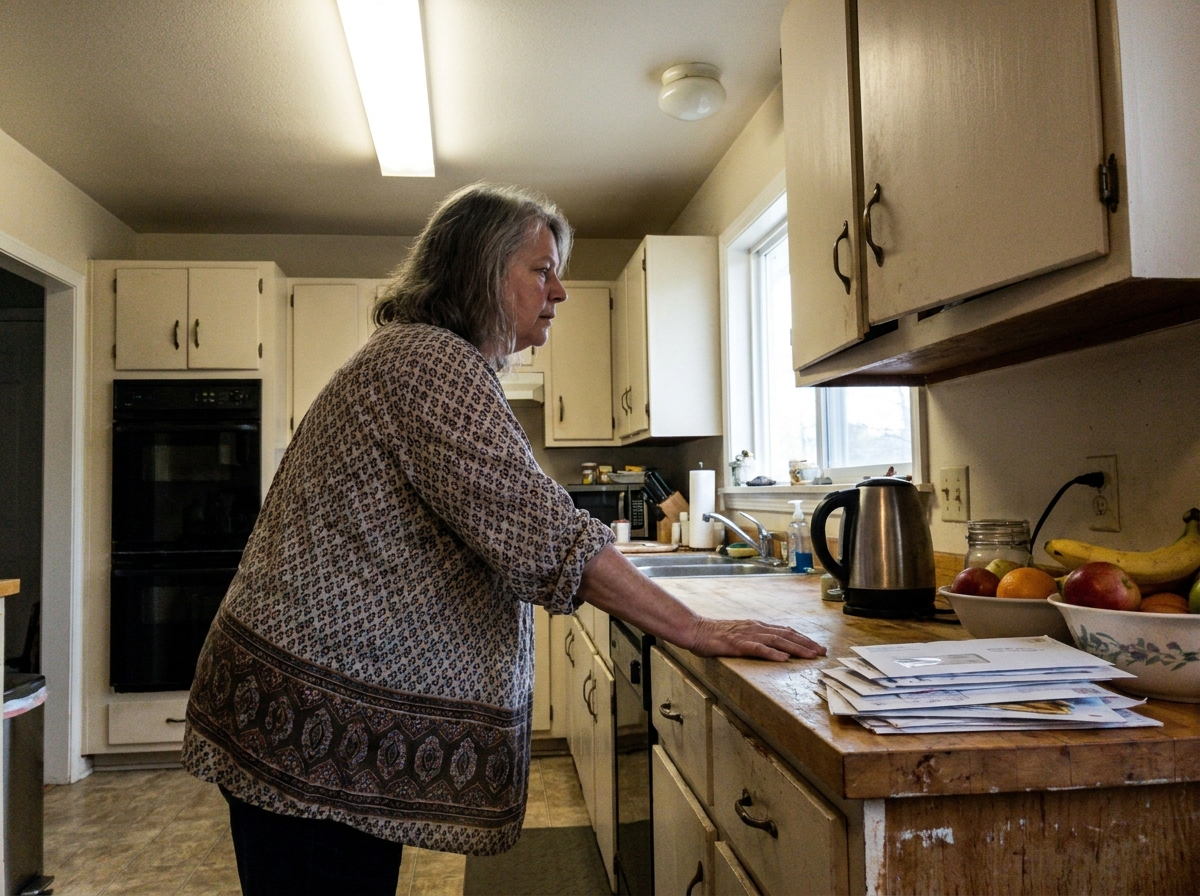
I hold the railing with both hands now. Going down and coming up. I didn’t decide to start; I just noticed one day that I was doing it, and then noticed how many other things I’d quietly started doing, and a cold feeling went through me. If you’ve caught yourself reaching for a counter or a doorframe before you’ve consciously decided you need it, you already know the exact feeling I mean.
I was a nurse for thirty-four years. I should have caught this in myself years before I did. That’s the part that still stings — I spent a career telling other people not to brush off their bodies, and I brushed off my own right up until the afternoon it nearly put me on the floor.
A podiatrist finally explained that there are three signs that tell you which kind of unsteadiness you’ve got. I’d had all three for two years and no one had named a single one. Here they are.
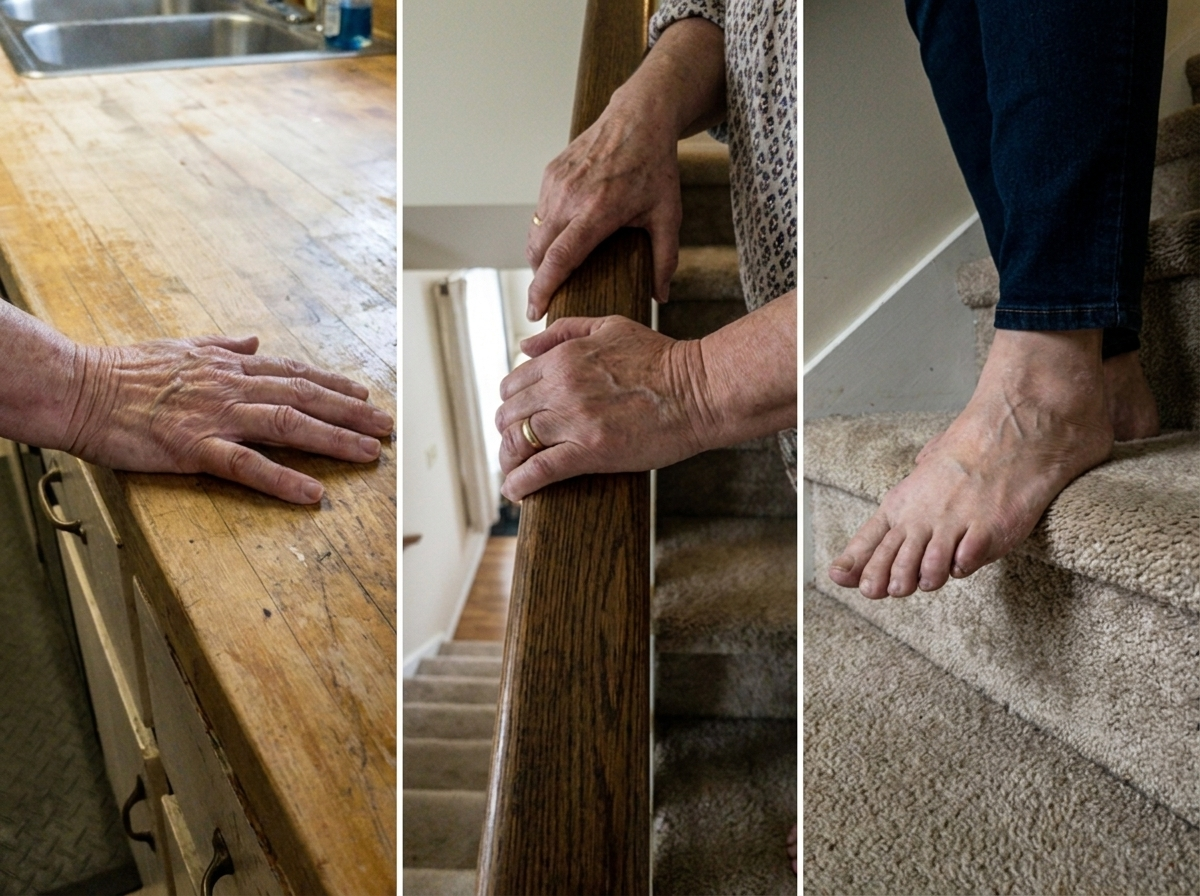
Sign one is the list. The surfaces you’ve quietly retired — the railing held both ways, the lower step, the chair you reach for, the driving you stopped doing after dark — none of which you ever sat down and consciously decided. The list just gets longer, a little at a time, and one day it’s long.
Sign two is the reach. Your hand finding the counter or the wall before your mind has decided you need it. That’s not nerves. That’s your body telling you the information from your feet is arriving too late to trust, and stepping in to cover.
And sign three — the one almost nobody connects — isn’t about balance at all. It’s a specific thing about sensation: that half-second where your foot lands on a step and your brain doesn’t quite register that it landed. That gap is the tell that distinguishes signals that are merely slowing from signals fading toward the kind of fall that changes everything — and it’s the marker of whether you’re still inside the window where you can do something about it.
I was further down that road than I’d admit to anyone. Let me show you what’s actually happening, because once I understood it — and I’m a nurse, so I should have seen it sooner — everything finally made sense.
There was an afternoon I still think about. I came down the three steps outside the church the way I’d come down them for fourteen years — except my left foot landed and I didn’t feel where it landed, and it rolled, and I caught myself hard on the railing while the basket I was carrying went flying. People came over. My friend Margaret asked if I was hurt. I told her I missed the step.
I hadn’t missed the step. I came down on it exactly where I meant to. I just couldn’t feel it was there until my foot was already past it. And rather than say that out loud to a churchful of people, I told them I wasn’t paying attention. I sat in my car in the parking lot for ten minutes before I trusted myself to drive.
Here’s what the podiatrist explained — and as a nurse it landed hard, because it was so obvious once she said it.
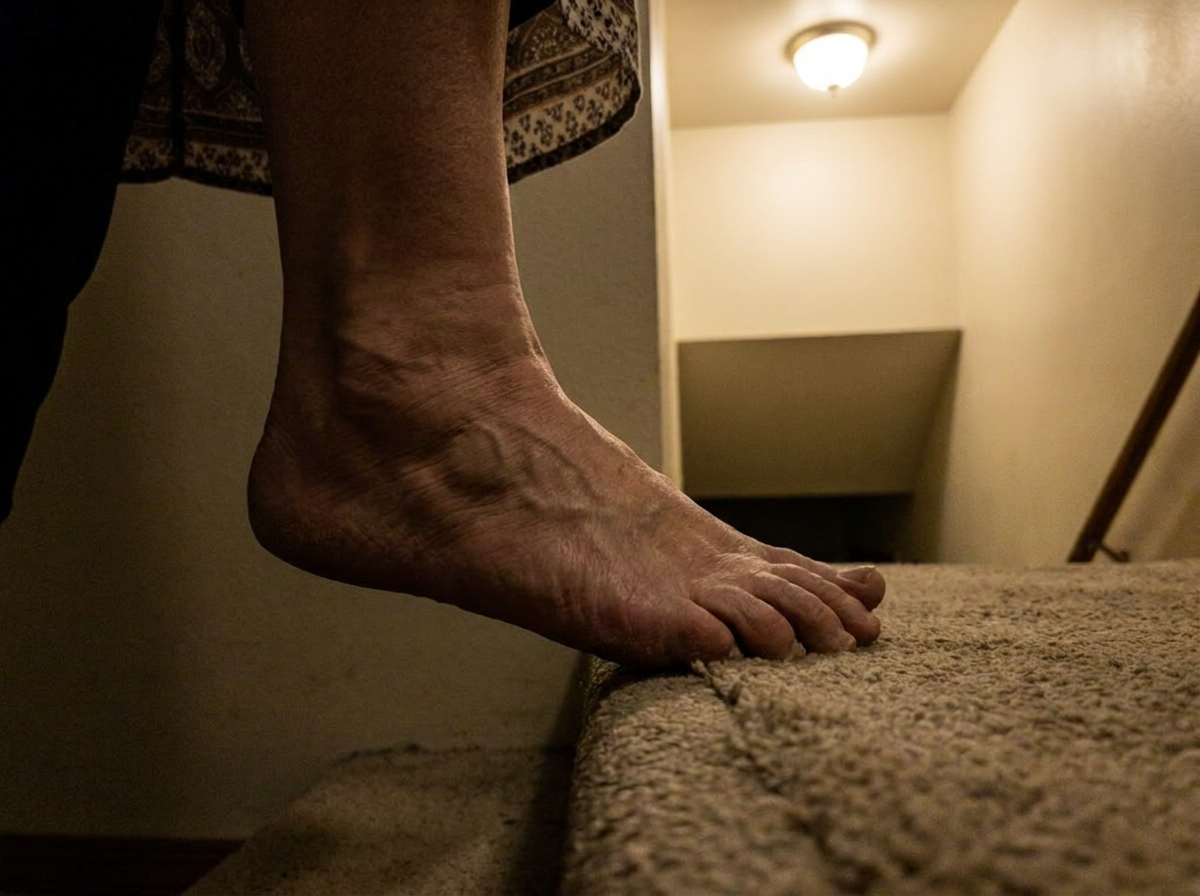
The soles of your feet are packed with nerves whose only job is to tell your brain, instantly, where the ground is. The edge of a step. The give of the carpet. The half-inch your foot drops as your weight shifts. Your balance runs on that feed, second by second, beneath all conscious thought — like a hundred tiny scouts reporting the ground back to headquarters, constantly.
When the small blood vessels that feed those nerves start to under-deliver — as they do with age, with years of standing, with circulation that quietly drops off — the scouts don’t stop reporting. They report late. Your brain is steering your balance on information that’s a half-second stale. On flat ground you’d never know. But on a step, a curb, a wet tile — that half-second of old information is the whole difference between catching yourself and going down.
And it feeds itself, which is the part that frightened me. The later the reports come, the more your body leans on your eyes and your hips to compensate — and that compensating is exhausting, and a tired body is a body that catches itself slower. So the margin gets thinner each month. Not because anything dramatic happens. Because the same quiet lag repeats and compounds, and your world gets a little smaller to match it.
Some specialists have started calling that a silent shutdown — the slow loss of the circulation and clear signaling your feet depended on your whole life. It’s silent because there’s no event. There are just scouts who used to report instantly, and started running late.
The numbness was never the problem. The numbness was the alarm telling me the reports were coming late — and it had been ringing for two years before I understood it.
Once I understood that, everything I’d done made sense in a new and frustrating way. Every bit of it was aimed at the wrong thing.
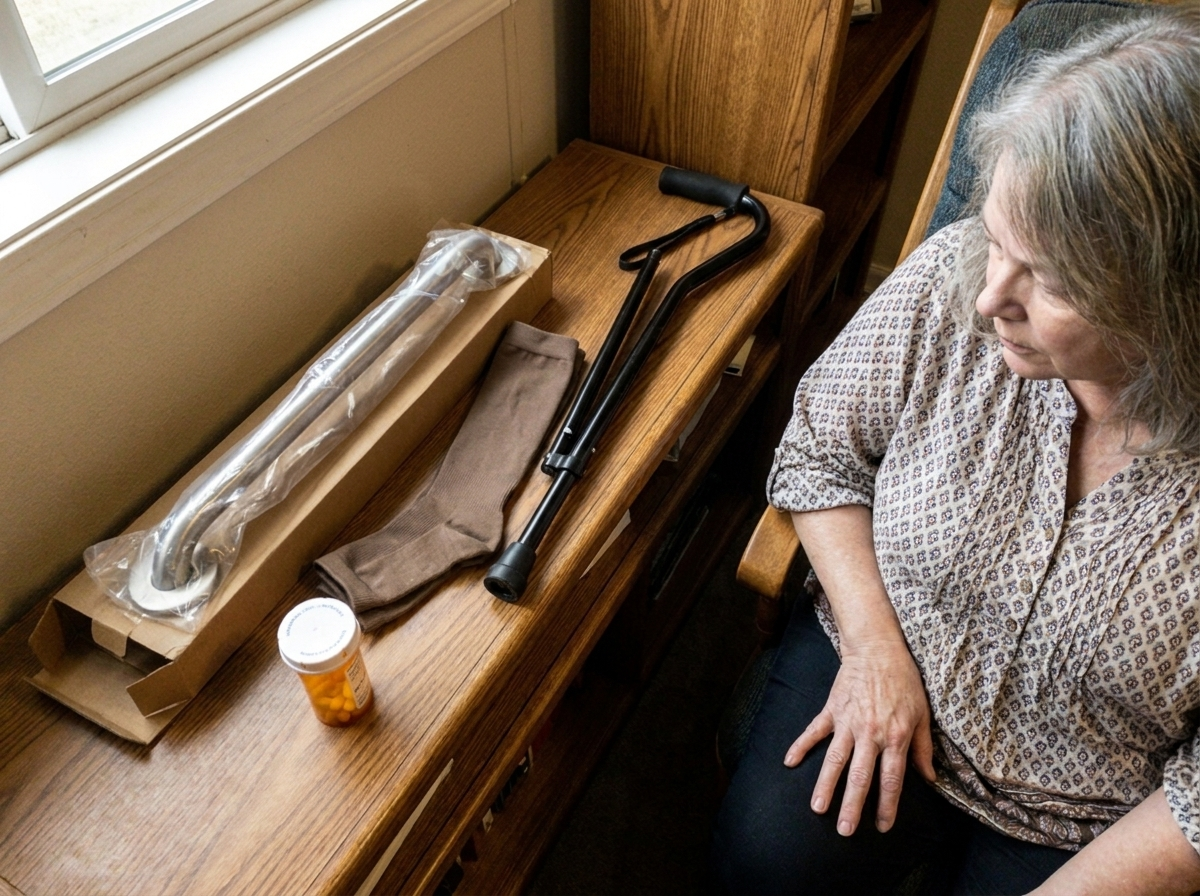
I went to the doctor twice — about eighteen months before the church steps, and again six months before. Both visits went the same way. They checked the pulses in my feet, asked about my blood sugar, which has been fine for years, and told me some numbness is normal at my age — watch the sugar, come back if anything changes. I won’t be unfair to them; they were kind, and they weren’t dismissive. But what they gave me wasn’t a treatment. It was an observation and permission to keep living exactly as I had been. And I now know I had plenty of company in that: in the largest screening studies, more than eight in ten people who have this nerve change have never been told they have it. I was a nurse, and I was one of the eight.
Then there was the caution itself — the railings, the lower pew, the not driving at night. That isn’t a solution. That’s the problem wearing a coat, and I’d been quietly buttoning it tighter every month. Being careful doesn’t make the reports arrive on time. It just manages how frightened you are while the margin keeps thinning.
There was a balance exercise a physical therapist mentioned in passing too — stand on one foot at the counter, thirty seconds a side. It builds the muscle that does the compensating. It never once reaches the reason the compensating started.
My son was the one who pushed me — not back to the same doctor, but to someone who actually worked with older adults. So I made one more appointment, with a podiatrist in the next town who’d built her practice around women in their sixties and seventies. I almost cancelled. I’m glad I didn’t.
She did the same sensation tests the other two had. Then she sat down instead of typing, which I noticed, because the other two never had.
I told her I didn’t know what she meant.
She wasn’t selling me anything. She was just the first person in two years who looked at how I walked and asked why instead of writing normal for your age and sending me home. That one question is the reason for everything that came after.
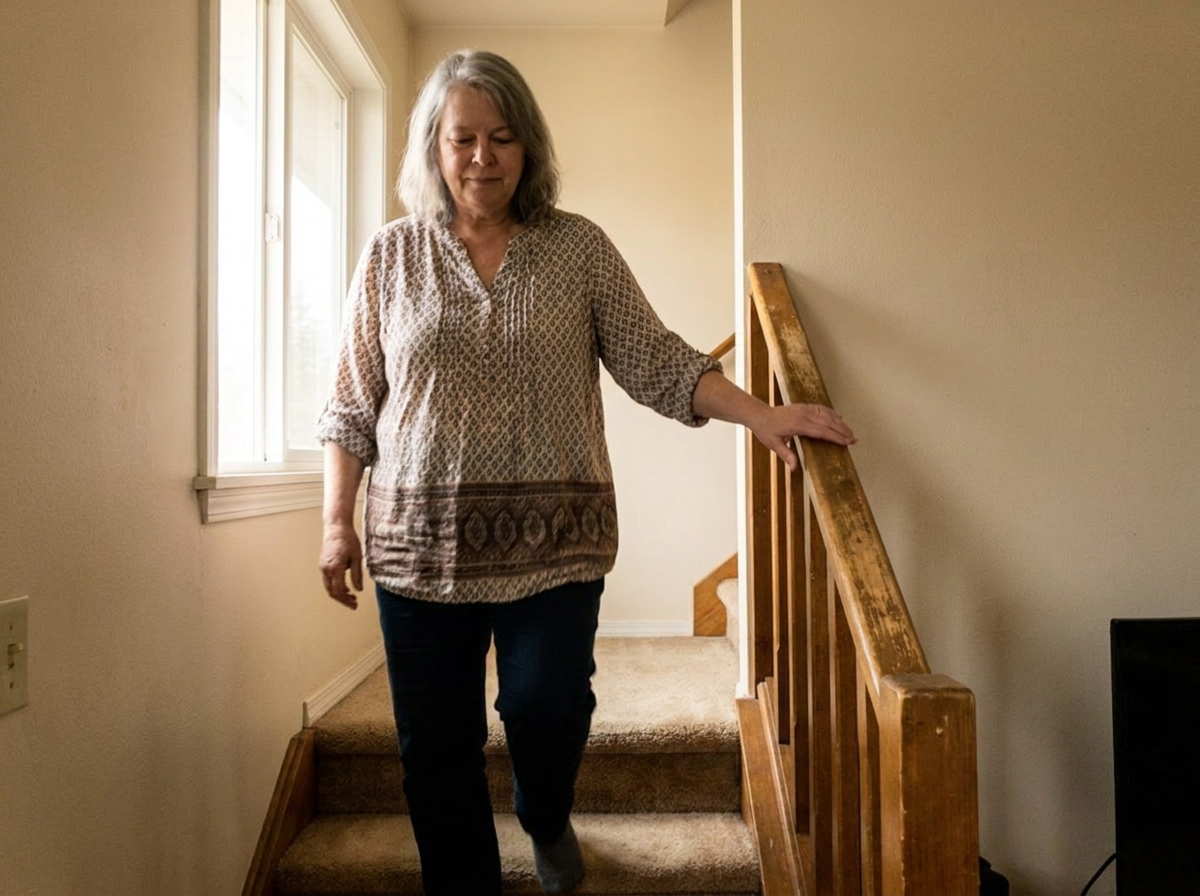
I want to tell you about a Sunday in May. I’d been doing the one thing she pointed me toward for about a month.
I hadn’t stopped going to church after the fall. But every Sunday since, I’d taken those three steps slowly, held the railing both ways, and Margaret had stood beside me on the second step without making it obvious she was doing it. She’d never said a word about the basket going flying. She didn’t need to. She knew.
That Sunday, the service ended the way it always does. I picked up my purse, walked down the centre aisle, and stopped at the top of the three steps. I want to be honest about why I stopped — it wasn’t the steps. It was that Margaret had put her hand on my elbow, the way she’d been doing since the fall, without my asking.
I turned and looked at her. “I think I’m all right today,” I said. She didn’t argue. She let go of my elbow.
I went down the three steps the way I used to go down them. Not the careful way I’d been going down them for two years. The other way — where you step, and your foot lands, and you know it landed because your foot tells you. I felt the first step. I felt the second. I felt where the third one ended. Margaret was right behind me, and when I reached the sidewalk I turned and she had her hand back at her side, smiling at me in a way I hadn’t seen in a long time. We walked to the parking lot and neither of us said a word about it. We didn’t need to.
That was the moment I knew. Not because anything had been cured — I’ll be straight with you about that — but because something I’d been compensating for, with every single step, for two years, had quietly stopped being something I had to manage. And the woman who’d been steadying me had seen it before I was ready to say it out loud.
After that it was the small things. I moved back from the second pew to the third. I went down my own basement stairs without the railing, carrying the laundry basket with both hands. I drove myself to choir after dark. I stood at the counter making dinner and didn’t reach out to steady myself once.
I’m not telling you my feet are perfect. I’m 67 and I spent 34 years standing on them. What I’m telling you is that I got the small things back. Which turned out to be everything.

+ GET FREE GIFTS
What finally helped wasn’t synthetic. Revella Miracle Balm is a blend of five plant-based ingredients used in traditional medicine for generations, and what made me trust it — as someone who spent a career around medicine — was that each one maps to a specific piece of the silent shutdown, not one vague “soothing” promise.
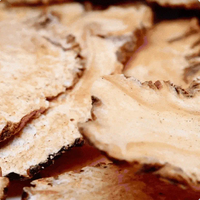
Angelica root
long used to support circulation into the small vessels, which is exactly the layer that under-feeds the nerves in your feet. The whole point is getting blood flow back to where the scouts are supposed to report from.

Comfrey
traditionally used on tired, overworked tissue to support its natural recovery, aimed at the nerves and tissue that have been running on too little for too long.

Frankincense and myrrh
used for centuries to calm irritated, overstrained tissue so the system can settle instead of staying agitated.

Peppermint and a beeswax base
the peppermint for immediate comfort you can actually feel, and the beeswax base built to carry the blend deeper than a surface cream, into the layer the doctors and the caution and the balance drills never reached.
Five ingredients, five jobs, all aimed at the same thing: getting clear, on-time information coming back from the floor.
I’d stopped trusting testimonials years ago and promises before that. What I hadn’t lost trust in were the numbers about the problem itself — and as a nurse, the numbers are what got my attention.
More than one in four adults over 70 has measurable nerve damage in their feet — the kind that dulls the signals your balance depends on — and it climbs higher in the oldest groups. It happens whether or not you’ve ever had a blood sugar problem; plenty of people who get it never did, which is exactly why “watch your sugar” was never going to help me. And the number I already mentioned, the one that made me angry once I understood it: more than eight in ten people who have it have never been told. It goes unnamed. Most have never even heard of the thing quietly rewriting how their feet meet the floor.
Revella does have a customer survey too — more than 2,000 users, 78% of whom reported noticeable comfort, steadier movement, or easier walking within the first two weeks of daily use. The survey isn’t what convinced me; the explanation did. But it told me what to expect: not “cured,” not “fixed,” but noticeable — the kind of difference you feel in an ordinary day.
And once I started telling people, I found out how many of us there are. Margaret first — who, it turned out, had been holding the railing at her own front steps for over a year and hadn’t told a soul, not even her husband. We’d had coffee at the same kitchen table once a week for fourteen years and I never knew. Then a woman from choir. My next-door neighbour. Most of them are still using it. According to that same survey, more than 9 in 10 who stuck with it for the full 60 days said they’d recommend it. The quiet ordinary lives they got back are the proof that actually matters to me.

I almost didn’t order it. I’m 67 and I’ve gotten particular about money — I watched my own mother spend a quiet fortune in her last years on things that didn’t help. The cost was never really the money. It was the disappointment, and the slow erosion of trusting your own judgment about what to try.
+ GET FREE GIFTS

If you’re where I was — explaining away a stumble, holding railings you didn’t used to need, taking the lower pew, watching every step on the way down — please don’t wait as long as I did. Remember what the lag does: it compounds. Every month the reports come a little later, the compensating gets a little more tiring, the list of steps you trust gets a little shorter — and the margin between catching yourself and going down gets a little thinner. The fall isn’t just an injury. It’s the moment the conversation about whether you should still live on your own stops being yours to have. Waiting isn’t neutral. Waiting is the thing that brings that day closer.
I won’t tell you it’s an overnight cure, because you’ve been brushed off enough and you’d see straight through it. Revella Miracle Balm is a daily ritual that supports what your feet have been quietly losing for years — thirty seconds in the morning and thirty at night, into the feet and the lower ankles where the small vessels run up into the foot, and the patience to let the signal catch up. It won’t happen overnight. It will be real.
For a limited time, first-time orders are 50% off with free shipping and a full 60-day money-back guarantee. Keep the jar if it doesn’t work. Sixty days to find out which kind of unsteadiness you’ve been living with — and to start getting the steadier kind back.
I still hold the railing at church some Sundays. Some Sundays the tingling is there and some it isn’t. But the next time I take those three steps down, my feet will know where the third one ends.
→ Claim 50% off and start your 60 days(Limited stock available due to high demand. Offer expires when the current batch sells out.)
THIS IS AN ADVERTISEMENT AND NOT AN ACTUAL NEWS ARTICLE, BLOG, OR CONSUMER PROTECTION UPDATE. THE OWNERS OF THIS WEBSITE RECEIVE COMPENSATION FOR THE SALE. Advertising Disclosure: This website and its owners are compensated for promoting and recommending the products and services mentioned. This website is an advertisement and not a news publication. Any photographs of persons used on this site are models. The owner of this site and the owner of the products and services referred to only provide a service where consumers can obtain and compare products and services.
Margaret Ellison
The lie about the hem. I told a man in a parking lot I’d “missed the curb.” I didn’t miss the curb — I couldn’t feel it. Reading this undid something in me. I’ve never said that to anyone.
Like · Reply · 17 · 33 min
Walter Boyd
Retired pipefitter, 36 years. Started grabbing the counter to stand up about two years ago and told nobody. My daughter sent me this. Ordered.
Like · Reply · 8 · 49 min
Carol Nemeth
I moved up one pew at my own church because of a single step and never told my husband why. I’m 70. Just placed my order.
Like · Reply · 6 · 1 h
Susan Park
I’m a retired RN, thirty years of it in geriatrics, and the balance-work line is exactly right. It’s the proprioception — the feeling of the floor — that nobody treats. The small-vessel framing is sound. I ordered for myself and my sister.
Like · Reply · 23 · 1 h
Eleanor V.
“Being more careful isn’t a treatment, it’s a surrender.” I had to set my phone down after that line. Ordering.
Like · Reply · 13 · 2 h
Hank Dillard
Drove a delivery route 28 years. Heard “watch your blood sugar, come back if anything changes” almost word for word. Skeptical of creams but the refund makes it easy. Trying it.
Like · Reply · 5 · 2 h
Patricia L.
I stopped going down to my own basement a year ago. Just stopped. Reading this I realized I never actually decided to — it just happened, one careful step at a time. Ordered two jars.
Like · Reply · 9 · 3 h
Joan Whitmore
Read the whole thing waiting for the catch. No “throw away your cane,” no doctors-hate-this. Just an honest woman. That’s exactly why I trust it.
Like · Reply · 15 · 3 h
Gloria Sandoval
The friend putting her hand on the elbow without being asked. My neighbor does that for me now and we’ve never spoken about it. I cried. Just ordered.
Like · Reply · 10 · 3 h
Ted Braun
Former roofer, 40 years on ladders. The unsteadiness scares me more than pain ever has. The keep-the-jar guarantee got me. Done.
Like · Reply · 4 · 4 h
Frances Okeke
I’m a retired teacher, 33 years on hard floors, and the numbness crept in so slowly I never linked it to the standing. First explanation that fit. Ordering today.
Like · Reply · 11 · 4 h
Bev Castellano
How is this different from the compression socks my doctor told me to wear? Asking honestly before I buy.
Like · Reply · 2 · 5 h
Lorraine Beck
@Bev Castellano the way I read it, the socks work on swelling and the surface, this is meant to support the deeper layer she keeps talking about — the part the doctors weren’t looking at. That’s the reason I’m willing to try it.
Like · Reply · 6 · 5 h
Marvin Cho
My wife read this to me. She got to “I felt where the third one ended” and we both just sat there for a second. Bought it that night.
Like · Reply · 9 · 6 h
Rosalind Ferraro
I gave up driving at night two years ago. Quietly. Told myself it was the glare. If I could get even some of that back I’d pay ten times this. Ordered.
Like · Reply · 8 · 7 h
Don Hutchins
Retired electrician. On a fixed income now and tired of throwing money at things that don’t work. The 60-day money-back is the only reason I clicked order. We’ll see.
Like · Reply · 4 · 8 h
Annette M.
I held the rail with both hands at my granddaughter’s recital and caught her watching me do it. That’s the moment I don’t want again. Just placed the order.
Like · Reply · 7 · 9 h
Lou Brennan
Skeptic, retired machinist. Bought it purely for the refund policy. Will come back and tell the truth either way.
Like · Reply · 3 · 10 h
Mae Lindqvist
The coffee at the kitchen table for fourteen years and neither of them knowing. That’s my best friend and me exactly. We both ordered this week.
Like · Reply · 6 · 11 h
Cynthia R.
Just ordered for my mother. She explained away two stumbles last month and I let her. Not doing that again.
Like · Reply · 5 · 12 h
Howard Tran
Warehouse foreman most of my life. Numb toes by evening even now that I’m retired. The “I still hold the railing some Sundays” honesty is what convinced me it’s real and not a sales pitch. Trying it.
Like · Reply · 7 · 14 h
Edith Salinas
I read the church-steps part twice. That’s the exact thing I’m afraid of, finally put into words. Ordering now, before I talk myself out of it again like I always do.
Like · Reply · 10 · 16 h